Car rental: where the vehicle is and how it came back
With rental vehicles you are not tracking your own employees but your own property, driven by someone else. That changes both what is useful to you (mileage between hires, keeping to the agreed area, condition on return) and what you are obliged to put in place before you switch the device on.
Free 30-day pilot on 2 vehicles · document templates included
What actually changes
Mileage between hires
Kilometres driven are logged automatically, so the reading at hand-over and return is not copied off the odometer by hand and does not depend on how careful a colleague was during a busy spell.
When a mileage limit is part of the contract, the difference between what was agreed and what was driven shows immediately, with dates, and not only at the end of the month.
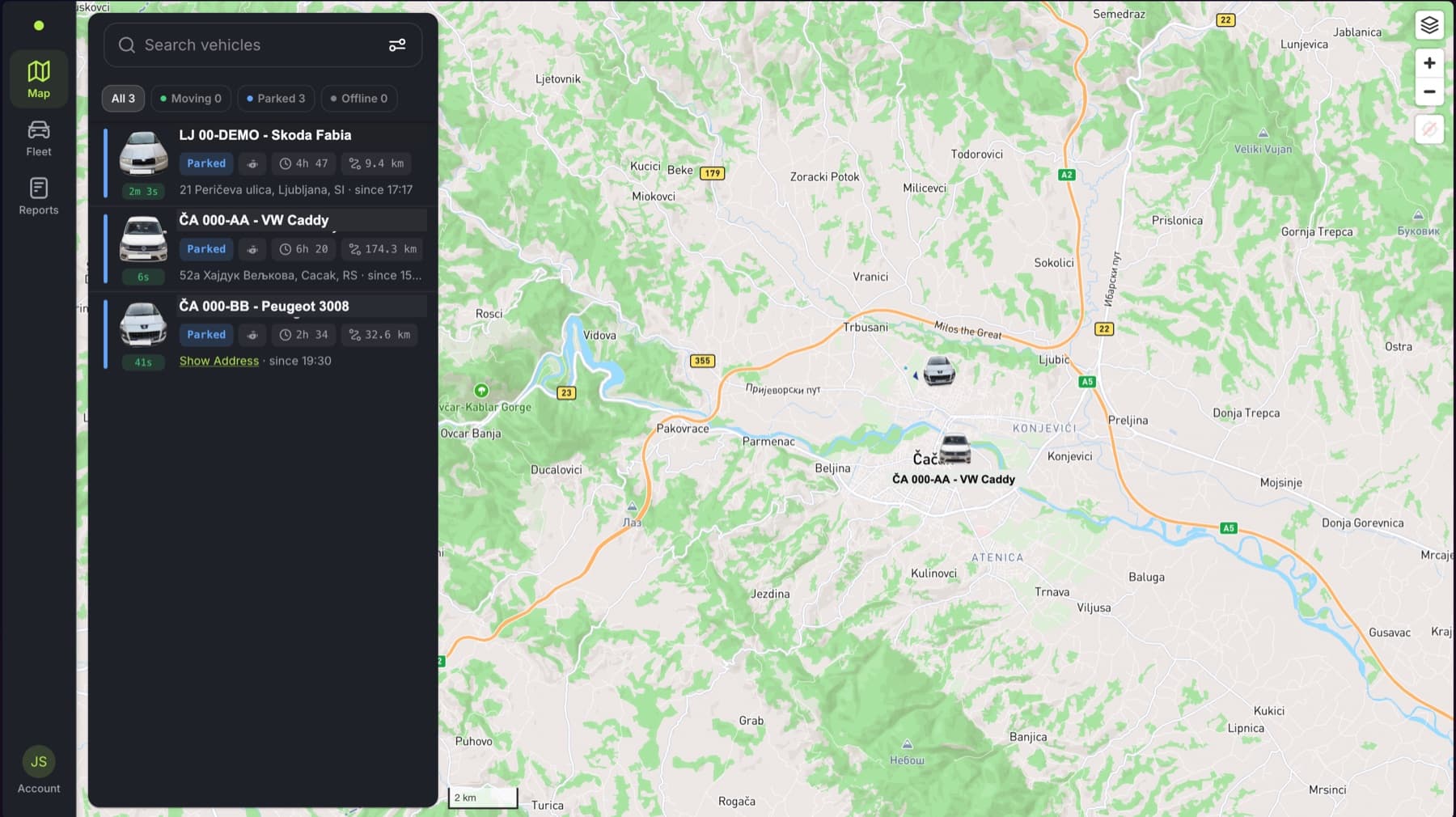
Example hire. Both readings come from the vehicle, not from the hand-over sheet.
Zones and the agreed area
Rental agreements often limit which countries the vehicle may be taken to. Geofences do exactly that job: you draw an area and get an alert when the vehicle leaves it.
The same applies to vehicles that should not leave the city or the airport area. The alert arrives when it happens, not when the vehicle comes back.
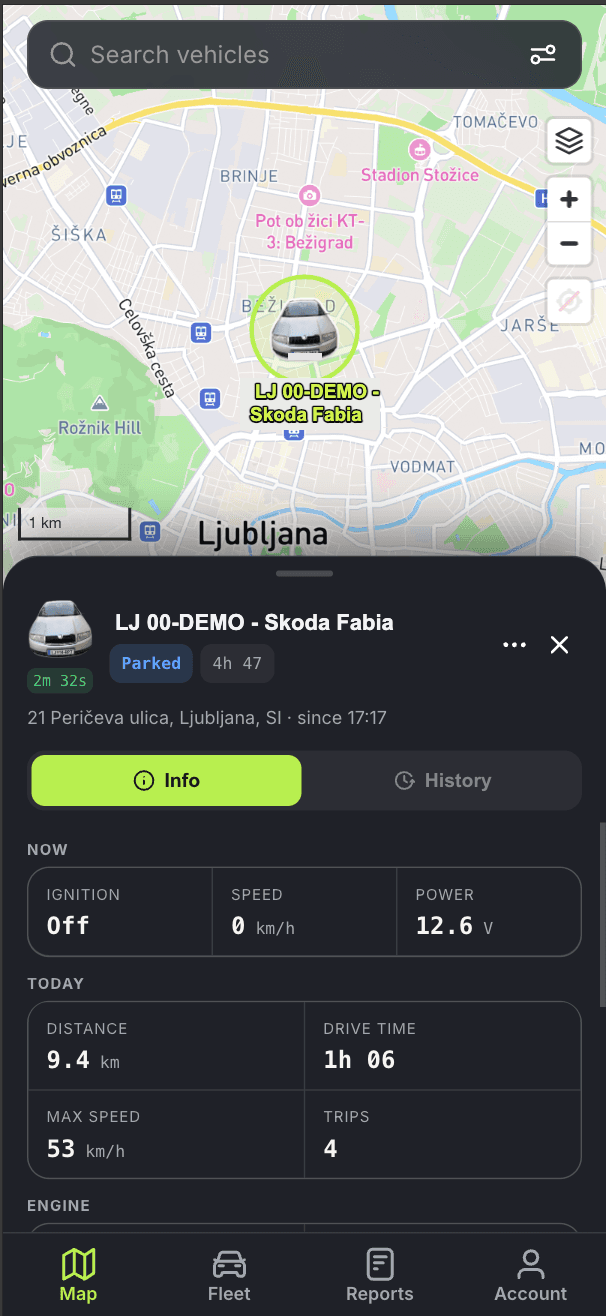
Example hire. The alert arrives the moment the car leaves the area, not when it comes back.
A vehicle that is overdue
The last known location and the movement history are the first thing you need when a vehicle does not come back on time. That does not replace reporting it to the authorities and it is not a recovery service, but it shortens the path from guesswork to a concrete fact.
The device is fitted out of sight and wired to permanent power; if the power is cut, the vehicle simply stops reporting, and the last report stays on record with its time and location.
The renter is a data subject too
This is the part most often skipped in practice. When you track a vehicle driven by your customer, you are processing their personal data, not just your own business data. Tracking therefore has to be written clearly into the rental agreement, with an explanation of its purpose and duration, rather than buried there as an unpleasant surprise.
The purpose should be limited and specific: protecting the vehicle, checking the agreed area and the mileage, not general surveillance of a person's movements during the hire. This is general information, not legal advice; check the wording in your contract with your own lawyer.
Four things that must be in place
A clause in the rental agreement
Tracking, its purpose and its duration must be written into the agreement the renter signs, clearly and not in small print.
A limited purpose
Protecting the vehicle, the agreed area and the mileage, not general surveillance of where the customer spent the weekend.
Who has access internally
Individual movements should be visible only to someone whose job it is. The platform supports multiple accounts, so access can be separated.
Retention period
History is kept for 6 months on Basic and 12 months on Pro / Fleet. A longer period requires a specific, documented reason.
Questions from rental companies
01Am I even allowed to track a vehicle hired out to a customer?
Tracking your own vehicle is legitimate, but it involves processing the renter's personal data. The conditions are that it is clearly stated in the rental agreement, that the purpose is limited and that the data is not used for anything else. This is general information; check the wording with a lawyer.
02Can the engine be immobilised remotely?
Immobilisation is only possible in Pro / Fleet configurations, on compatible vehicles and after a separate installation check. It is not a Basic feature and we do not promise it in advance for any vehicle.
03Can you see the fuel level when the vehicle comes back?
On compatible vehicles yes, because it is read off the vehicle bus. Availability depends on the model and is confirmed by a technical check before we quote.
04What if the customer finds the device?
The device is fitted out of sight, but its existence should not be a secret; that is exactly why tracking is stated in the agreement. A device that is discovered and mentioned nowhere is a problem; one that is properly set out is not.
Start with two vehicles from your fleet.
The pilot runs for 30 days and is free for qualifying fleets of at least 5 vehicles. It also comes with the document templates that go with the roll-out.
Reply within one business day
A concrete next step, not a callback request.
GDPR paperwork included
A data-processing agreement and an employee notification template (GDPR / ZZPL) come with onboarding.
No obligation
A request is not an order. You decide after you see the offer.